
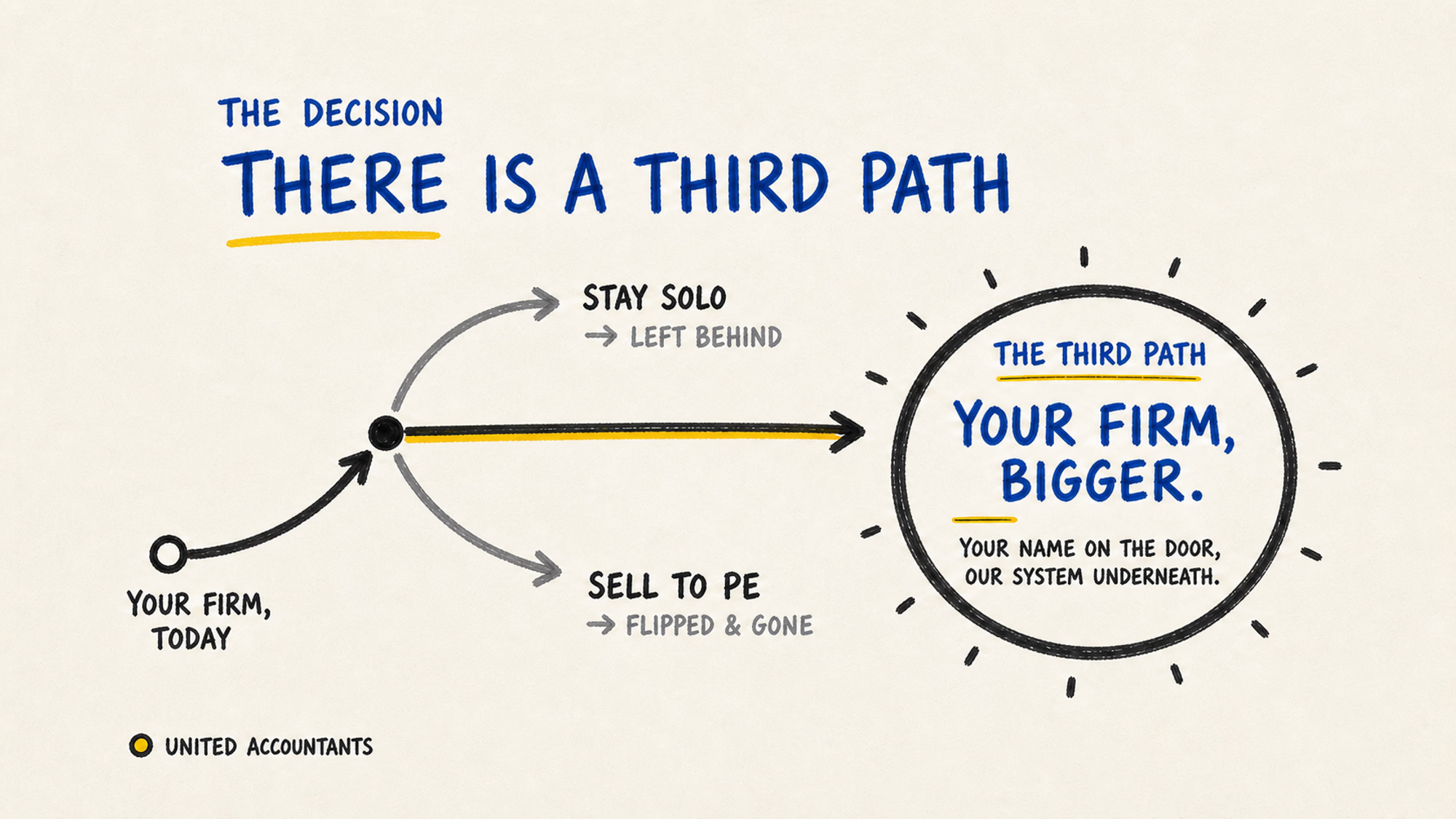
Accountants keep getting two offers. A third one exists.
TLDR
Selling to private equity or grinding on alone aren't your only two options. How other professions invented a third structure, and what to look for in yours.
A better path for accounting firm owners
An owner I talked to recently put his options in one sentence: "I can sell the firm, or I can keep being tired."
He's been running his practice for nineteen years. Two offers on the table, and if you own a firm right now, you know both by heart.
Selling to private equity and grinding on alone aren't the only two options. In dentistry, veterinary and medical practices, owners who compared notes forced the market to invent a third structure: keep a stake, keep control, keep your name, and plug into shared infrastructure. Accounting is a few years behind the same curve.
The default that isn't really a choice
The first one isn't really an offer, it's the default. Keep going alone, learn AI in the evenings and hope the firm across town isn't learning it faster. Some owners make this work. Most just get more tired every year, and tiredness is a strategy with an expiry date.
What the private equity number quietly includes
The second one comes from private equity, and the number on it looks good. I spent ten years at PwC and saw plenty of these transactions up close, so let me tell you what the number quietly includes. Your name gets absorbed. Your team gets restructured. And in five to seven years the fund sells your firm again, not out of malice, but because that is what a fund is: money with a deadline.
The consolidation is real, not a rumor. Private equity has struck 466 deals in the accounting profession over the past decade, and January 2026 was the busiest month on record. Ten of the twenty largest US firms are now backed by private equity, and nearly half of the top thirty. The staff and the clients didn't get a vote.
The pattern already played out in dentistry and vet care
Now here's the thing I'd want every owner to know, and it has nothing to do with us. This exact movie has already played in other professions. Dentists. Veterinarians. Doctors. When investors first found those fields, the only offer was a buyout. Then the owners started comparing notes. And the market did what markets do when the sellers get smarter: it invented better structures. A dentist today can keep a stake in the practice, keep clinical control, keep the name on the door, and still plug into shared infrastructure. The buyout stopped being the only option the moment owners stopped accepting it as one.
Accounting is a few years into that same curve. The buyout wave came first. The better structures come next. That's not a prediction, that's a pattern.
The third structure, and how to judge it
We built United Accountants to be one of them. Your name stays, your team stays, your clients stay. Our operating system and our people go in underneath. You take cash plus equity in United, so you own a piece of what we build together instead of a check and a goodbye.
But judge us the way you should judge everyone, including the option of doing nothing. Don't compare the numbers. Numbers are the easy part, and they're designed to be. Compare the structures, because the structure decides what your firm looks like the day after the ink dries, and every day after that.
Twenty years around this profession left me sure of one thing: trust is the product, and everything else sits on top of it. You spent decades building yours. Whatever you sign should let it keep compounding.
So, honest question. If both offers on your desk cost you the thing you actually built, what would a third one need to look like for you to read it twice?